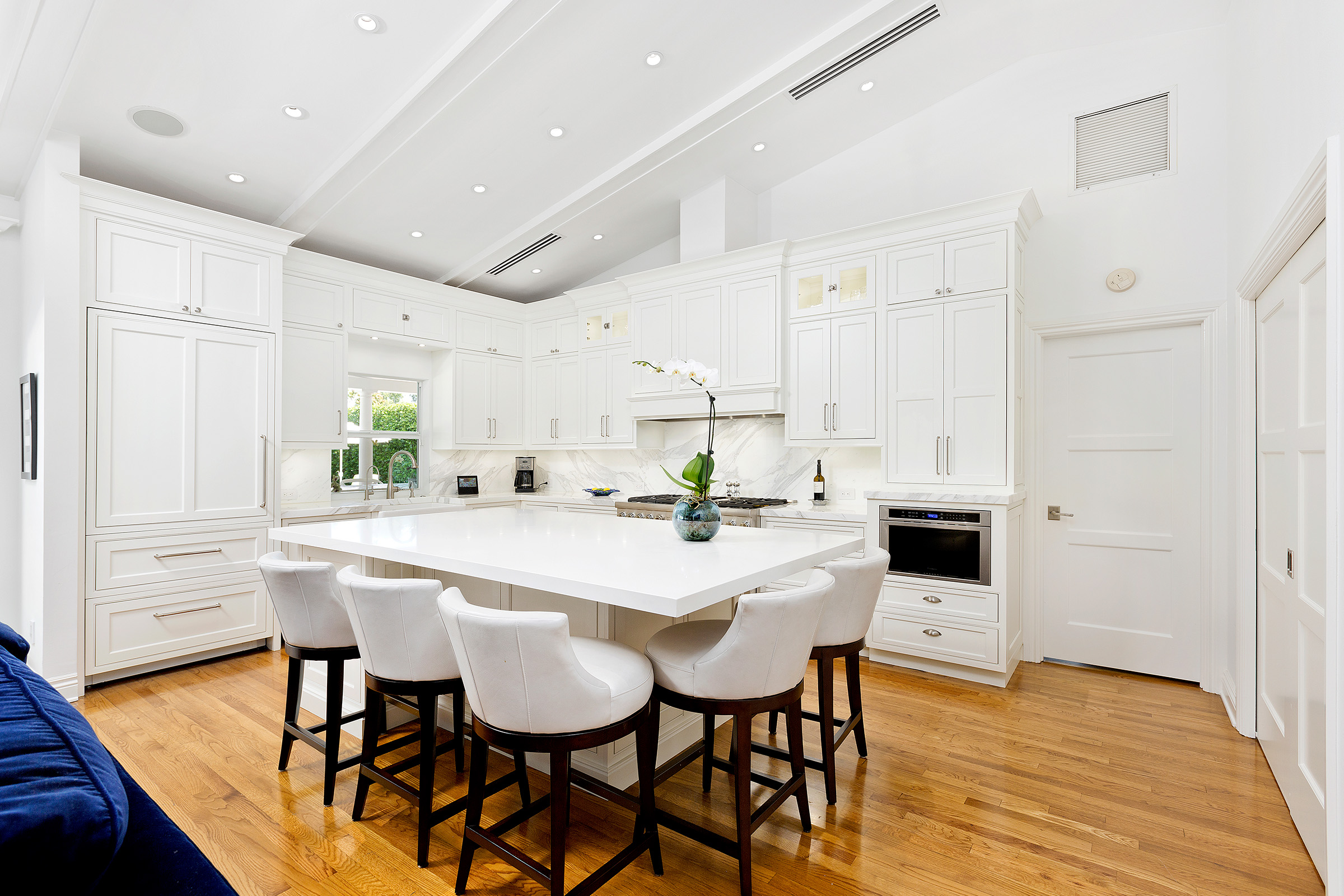
Today’s kitchens are more than just places to cook—they’re the heartbeat of the home. Between preparing dinner, helping with homework, and jumping on Zoom calls, the kitchen often becomes the ultimate multitasking space. Designing with this reality in mind means creating zones, storage, and features that flex with your lifestyle.
1. Define Clear Zones Within the Layout
Even in open-plan homes, you can carve out subtle “zones” that keep tasks organized.
- Cooking Zone: Centered around the stove, oven, and prep space.
- Homework Zone: A section of the island or built-in desk with outlets and task lighting.
- Work-from-Home Zone: A tucked-away nook or corner cabinet with charging drawers and storage for office supplies.
Pro Tip: Use cabinetry finishes or countertop materials to subtly distinguish each area without breaking flow.
2. Build In Smart Storage
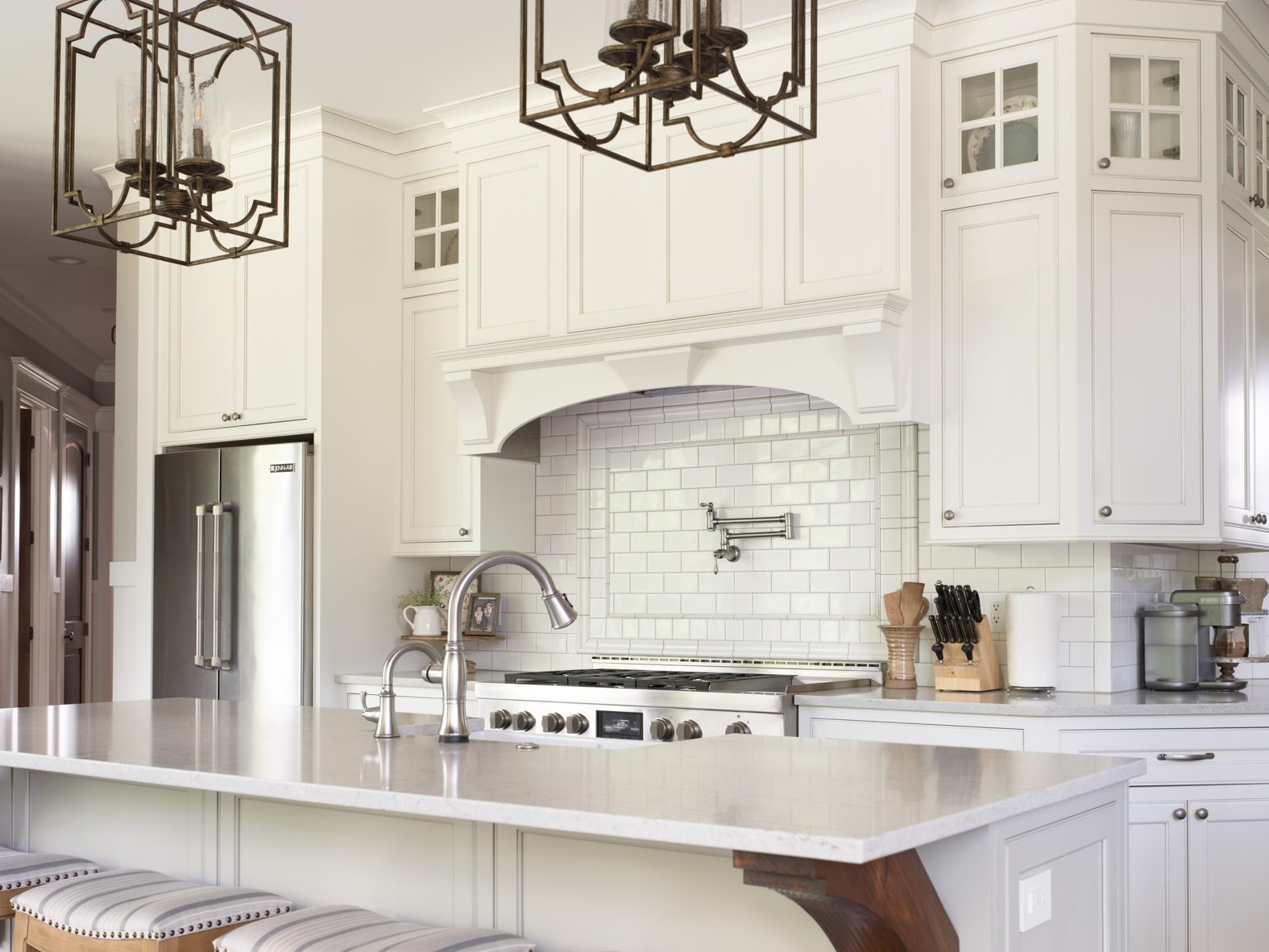
Multitasking requires flexibility—and storage is what keeps chaos at bay.
- Hidden Charging Stations: Inside drawers or cabinets to reduce cord clutter.
- Appliance Garages: To hide small appliances when not in use.
- Drawer Dividers: Keep school supplies, chargers, and kitchen tools separate but accessible.
3. Maximize Counter Space
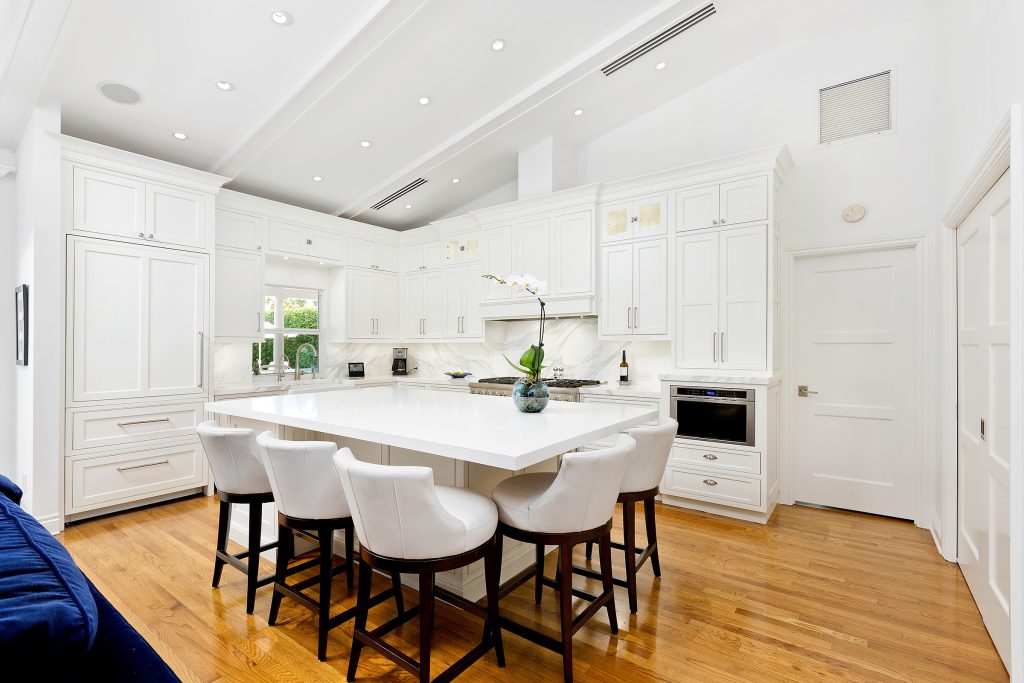
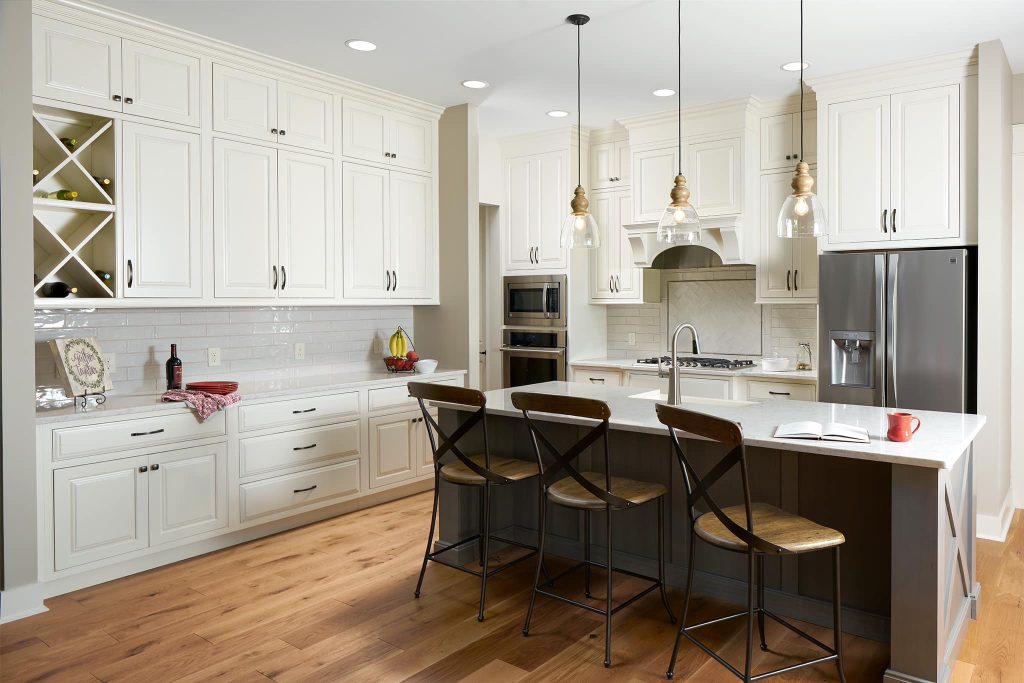
A large, uninterrupted island or peninsula can double as prep space, study desk, or meeting table.
Designer Trick: Consider waterfall edges for durability and an easy-to-clean surface for everything from dinner to craft projects.
4. Add Flexible Seating
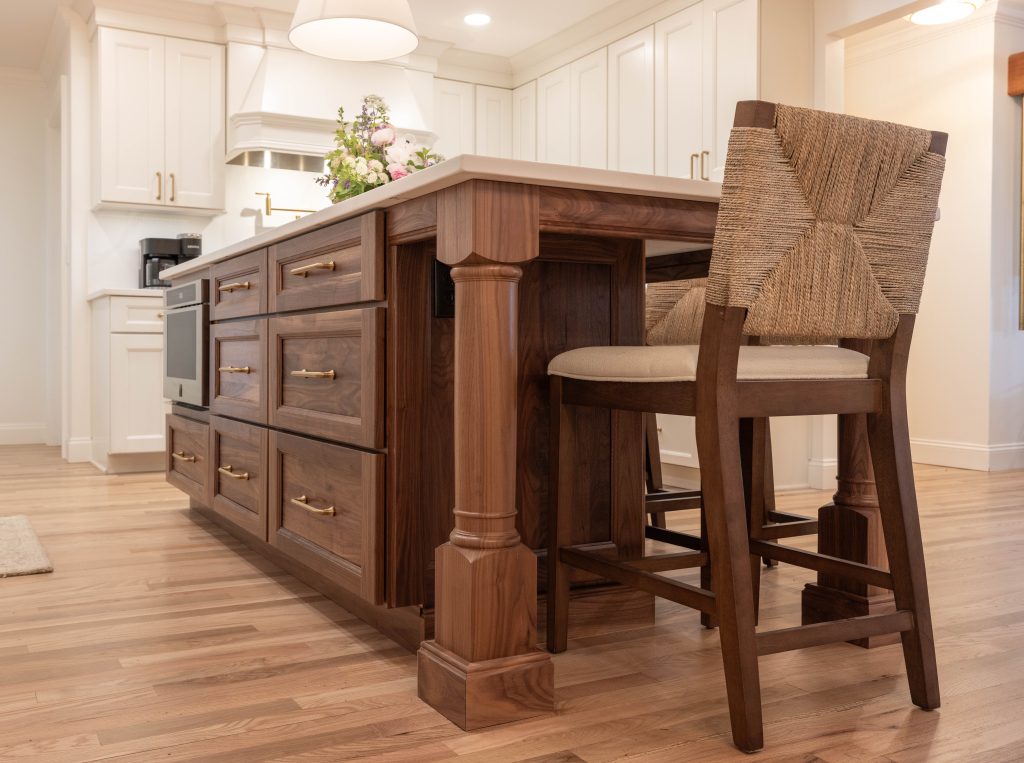
Bar stools at the island or a built-in banquette can transition easily from snack time to study time.
- Upholstered seating for comfort during long stretches
- Adjustable-height stools for kids and adults alike
5. Lighting That Adapts
Different tasks call for different lighting. Layered lighting keeps the kitchen functional and flexible.
- Pendant Lights: Bright task lighting over the island
- Under-Cabinet Lights: Ideal for cooking prep
- Dimmable Fixtures: Shift the mood from work mode to dinner mode
6. Keep It Connected (Literally)
Tech-friendly kitchens are essential for modern multitasking. Make sure outlets, USB ports, and even hidden power strips are planned into cabinetry and counters.
Final Thought:
When designed with real life in mind, your kitchen becomes more than a cooking space—it becomes a hub that supports work, school, family, and connection. Smart cabinetry, thoughtful layouts, and flexible features make multitasking feel effortless.